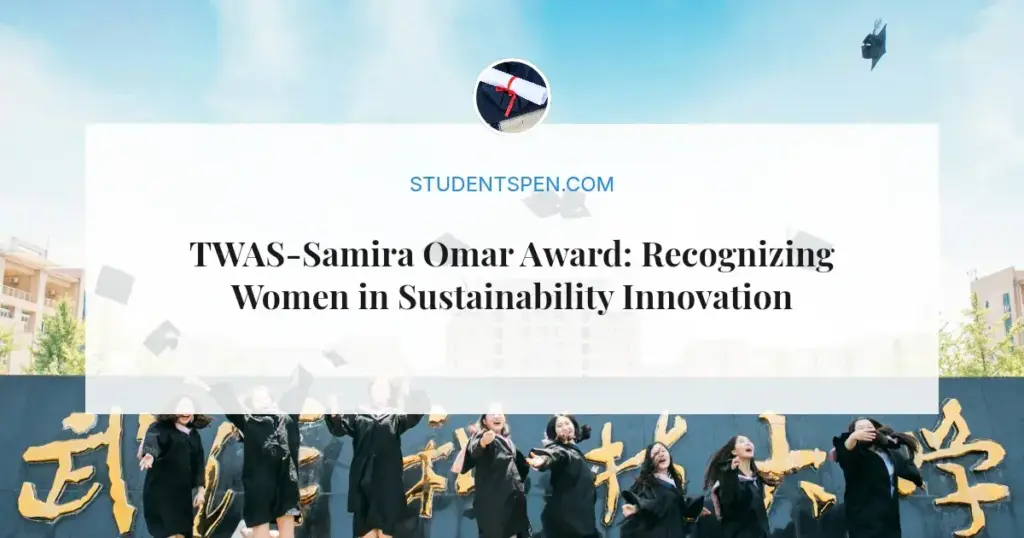
TWAS-Samira Omar Innovation for Sustainability Award: A Closer Look
The TWAS-Samira Omar Innovation for Sustainability Award is a significant recognition for women scientists working in least developed countries (LDCs). This award highlights the critical contributions these individuals make to environmental and biodiversity conservation. It not only provides financial support but also brings much-needed attention to their innovative work in sustainability.
Understanding the Award’s Purpose
The primary goal of the TWAS-Samira Omar Innovation for Sustainability Award is to acknowledge and reward female scientists who are making a tangible impact on the environment and biodiversity. The award is specifically aimed at those living and working in Least Developed Countries, recognizing the unique challenges and opportunities present in these regions. By focusing on LDCs, the award aims to empower scientists who may have fewer resources but are driving crucial advancements in sustainability.
Eligibility Criteria for Nominees
To be considered for the TWAS-Samira Omar Innovation for Sustainability Award, a scientist must meet specific eligibility requirements. The award is exclusively for women scientists who are nationals of a Least Developed Country. Furthermore, they must have been living and actively working within an LDC for the two years leading up to their nomination. This ensures that the award directly benefits individuals contributing to sustainability efforts within their home countries.
Key Areas of Scientific Focus
The award recognizes achievements across a broad spectrum of sustainability-related scientific fields. These thematic areas are designed to cover the most pressing environmental challenges and innovative solutions. They include advancements in clean and renewable energy, green chemistry, and sustainable agriculture, which are vital for ecological balance and food security.
Other important areas of focus are plastic degradation and pollution, water purification and sanitation, and climate change mitigation strategies. The award also looks at innovations in transportation technologies for smart cities, effective waste management, and the preservation of biodiversity. Finally, contributions to ecological economics and planetary health are highly valued, reflecting a holistic approach to environmental well-being.
The Award’s Impact and Recognition
The TWAS-Samira Omar Innovation for Sustainability Award comes with a substantial cash prize of USD 4,000. This financial support can be instrumental in helping the awardees continue their research, expand their projects, or invest in further innovation. Beyond the monetary award, the recognition itself serves as a powerful endorsement of the scientists’ work, potentially opening doors to further collaborations, funding, and global visibility. The award underscores the importance of women’s contributions to scientific progress in sustainability, particularly within developing nations.
Frequently Asked Questions
What is the TWAS-Samira Omar Innovation for Sustainability Award?
It’s an award that honors women scientists in Least Developed Countries (LDCs) for their work in environmental and biodiversity conservation.
Who is eligible to receive this award?
The award is for women scientists who are citizens of an LDC and have lived and worked there for at least two years before their nomination.
What scientific fields does the award cover?
It covers areas like renewable energy, green chemistry, sustainable agriculture, pollution control, water purification, climate change, waste management, biodiversity, and planetary health.
What does the award include?
The award includes a cash prize of USD 4,000 and significant recognition for the scientist’s innovative work in sustainability.