Deadline: April 4, 2026
Key Takeaways
- The fellowship provides six-month training in fact-checking and OSINT for journalists and researchers in West Africa.
- Benefits include hands-on coaching, publishing reports, building newsroom skills, and joining a regional network.
- It is open to full-time journalists from Nigeria, Ghana, Sierra Leone, Liberia, and The Gambia, with encouragement for women and those with disabilities.
- Applications close on April 4, 2026; submit via the Google Form to show your commitment to truth.
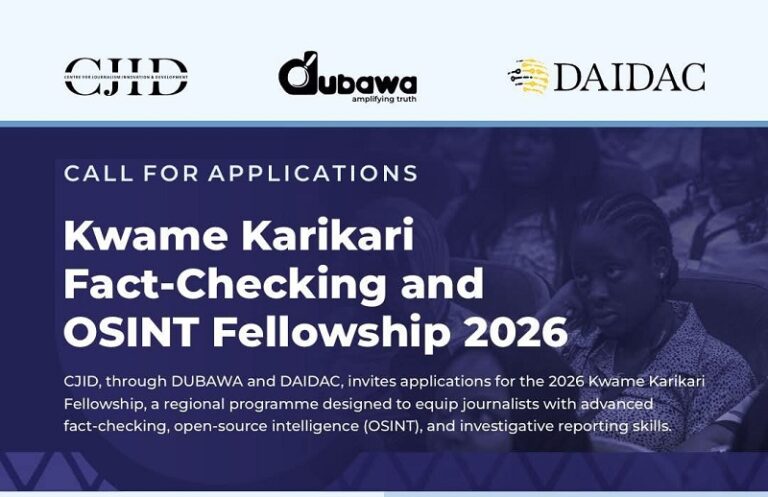
Applications are now open for the Kwame Karikari Fact-checking and OSINT Fellowship 2026. The Premium Times Centre for Investigative Journalism (PTCIJ), through its fact-checking project DUBAWA, runs this program. It aims to fight the fast spread of misinformation in West Africa. This fellowship helps journalists and researchers build skills to check facts and use open-source intelligence (OSINT). With just over a week left to apply, now is the time to act if you qualify.
This article covers the key benefits, who can apply, and how to submit your application.
The Kwame Karikari Fact-checking and OSINT Fellowship 2026 draws its name from Professor Kwame Karikari. He was a strong advocate for media freedom and started the Media Foundation for West Africa (MFWA). The program fights mis- and disinformation. It works to make fact-checking a normal part of newsrooms. And it builds knowledge about information disorder in Africa. This is the third edition of the fellowship.
It offers two paths. One is a six-month track for journalists. They learn to add fact-checking and OSINT to their daily work. The other is a six-month research track for scholars. They do original research and publish it to help understand information problems.
- Receive practical OSINT training. You get hands-on coaching in fact-checking with open-source tools. DUBAWA and DAIDAC teams mentor you and teach the latest techniques.
- Make real-world impact. Publish your reports on your own media platform and DUBAWA channels. This grows your reach and fights misinformation.
- Build your newsroom’s skills. Get help to set up a fact-checking desk and improve verification systems inside your team.
- Join a regional network. Connect with other journalists across West Africa who care about accuracy.
- Gain multi-platform visibility. Lead talks on fact-checking on social media, radio, and TV. Promote media literacy to your audience.
Past editions have built on success stories from fellows. They show how this training leads to stronger reporting.
- Open to full-time journalists from Nigeria, Ghana, Sierra Leone, Liberia, or The Gambia.
- Fact-checkers or investigative journalists ready to improve their skills.
- Past Kwame Karikari fellows interested in OSINT work.
- Exceptional writers with a passion for truth.
- People eager to learn and grow in fact-checking.
- Journalists who can commit time to the fellowship activities.
- Those with support from their bosses to publish fact-checks.
- Female journalists and those with disabilities are strongly encouraged to apply.
- Experts in climate or conflict reporting are welcome too.
Note that sources do not mention a stipend. The focus stays on training and growth benefits.
Click here to apply
Google Form application
Deadline: April 4, 2026. For more details, check the official fellowship page. The form is straightforward. It asks for your background and commitment.
The six-month program includes practical training with OSINT tools. While exact timelines are not listed, it builds skills step by step. Selection focuses on your commitment and fit, though details are limited. This fellowship stands out in West Africa. It boosts OSINT and fact-checking through DUBAWA and PTCIJ. Few programs match this focus on both journalists and researchers.
The Kwame Karikari Fact-checking and OSINT Fellowship 2026 offers vital training to combat misinformation in West Africa through hands-on skills and real-world impact. Journalists and researchers from select countries can build expertise, networks, and visibility in this six-month program. With the April 4 deadline approaching, check your eligibility and apply today via the Google Form to join the fight for accurate reporting.
Frequently Asked Questions
Who can apply for the Kwame Karikari Fellowship 2026?
Full-time journalists, fact-checkers, and researchers from Nigeria, Ghana, Sierra Leone, Liberia, or The Gambia can apply, especially women, those with disabilities, and experts in climate or conflict reporting.
What benefits does the fellowship offer?
You get practical OSINT training, mentorship, chances to publish reports, newsroom support, regional networking, and media visibility.
Is there a stipend for fellows?
No stipend is mentioned; the focus is on training, skills, and professional growth.
How do I apply and what is the deadline?
Fill out the Google Form with your background and commitment; the deadline is April 4, 2026.
Conversation
0 Comments